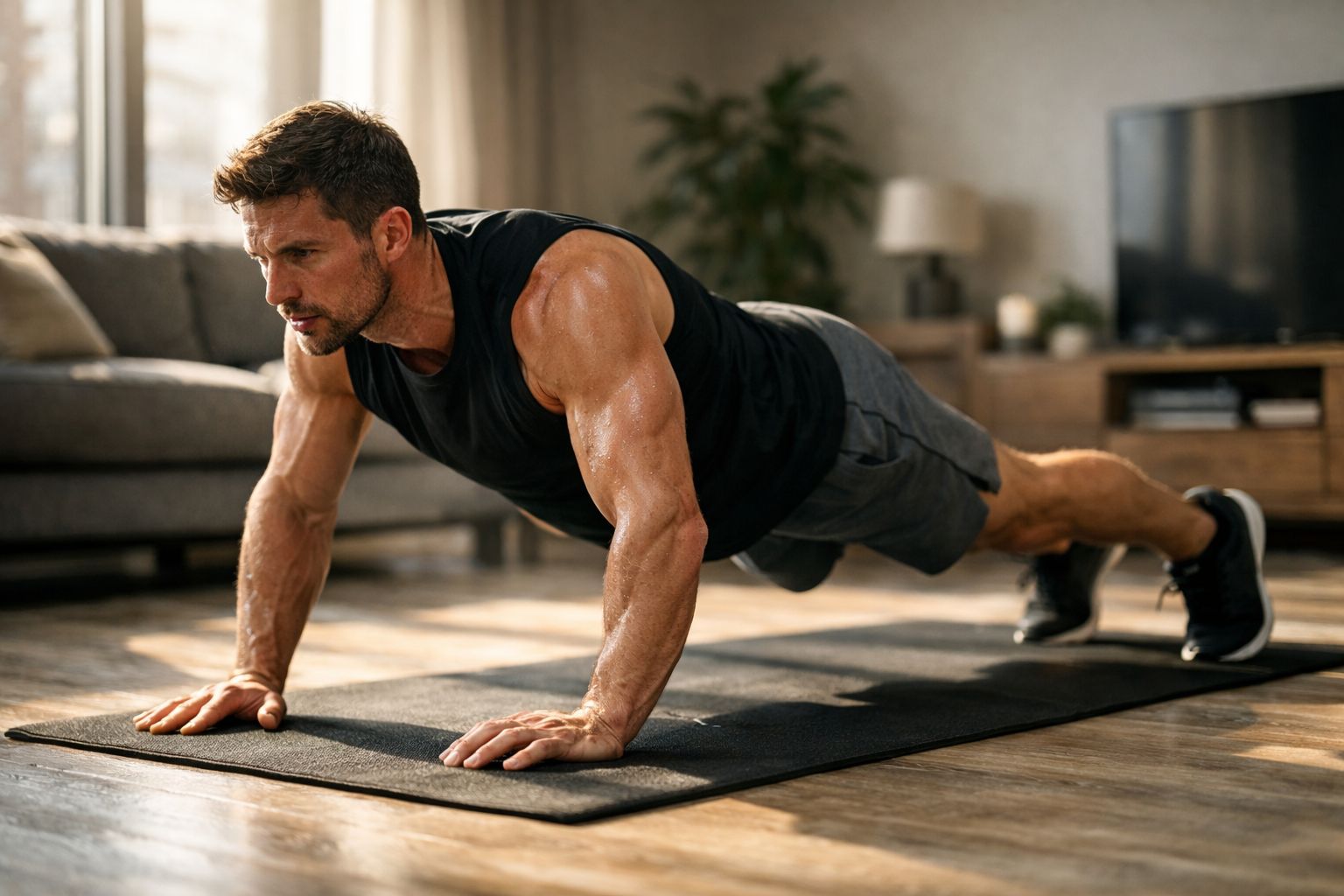
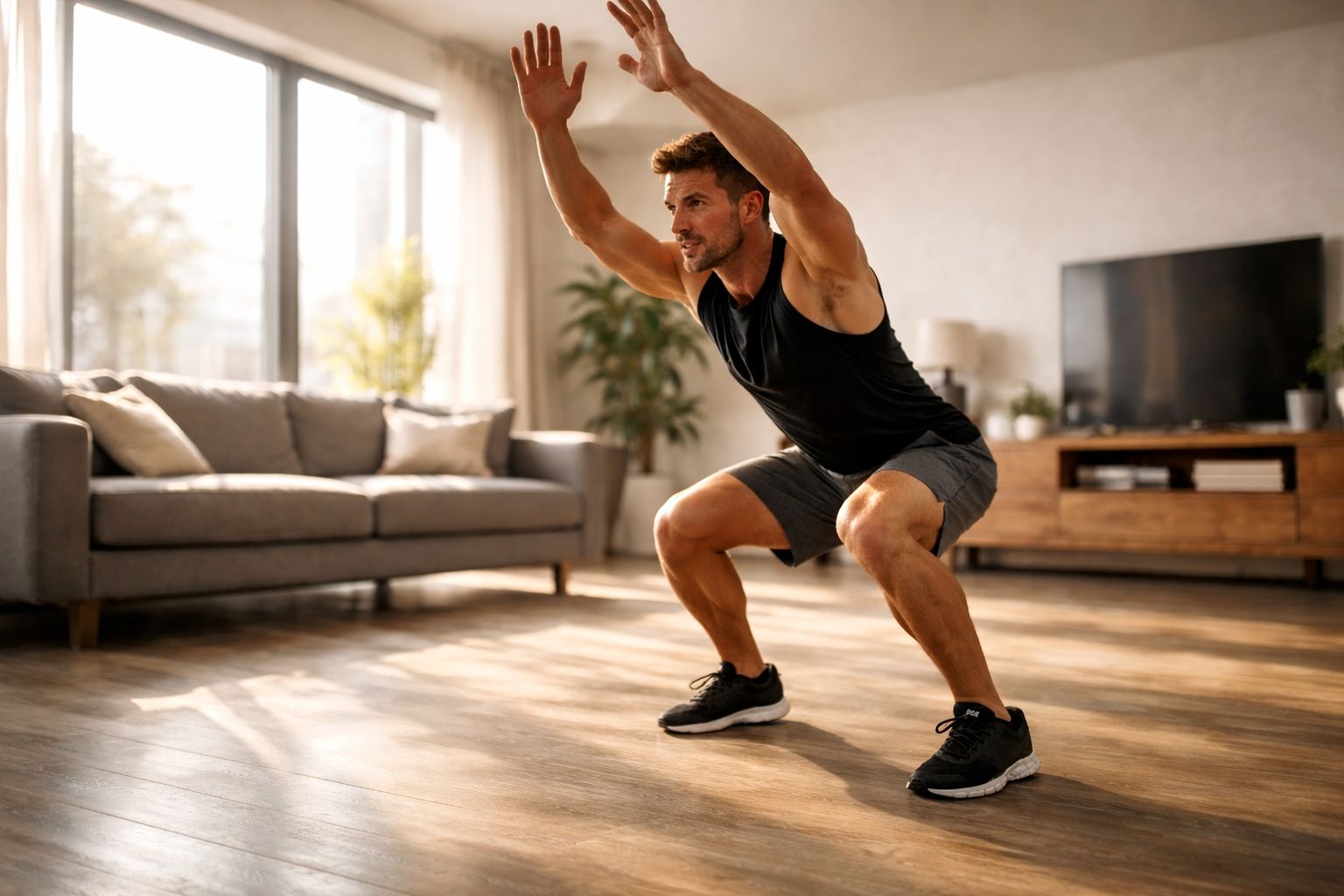
A 30-minute full body bodyweight workout sits at the perfect intersection of efficiency and effectiveness. It is long enough to challenge your muscles, elevate your heart rate, and stimulate meaningful adaptation, yet short enough to fit into real life without stress or scheduling gymnastics. This time frame encourages focus and intensity, removing the temptation to drag workouts out longer than necessary. When you know you have just half an hour, every movement becomes purposeful. Bodyweight training thrives in this window because it relies on compound movements that work multiple muscle groups at once, allowing you to train your entire body without rushing or skipping key elements.
A: 5 moves (squat, push-up, lunge, plank, mountain climbers) at 40s on / 20s off for 4 rounds.
A: Start with 30s on / 30s off, or reduce rounds from 4 to 3.
A: Use an incline (counter/couch), keep a straight line, and focus on controlled lowers.
A: Yes—use harder variations, slow tempo, more total reps, and consistent weekly progress.
A: Try fists, push-up handles, or forearm planks; keep shoulders stacked over elbows/hands.
A: Switch to reverse lunges, shorten range, and focus on controlled knee tracking.
A: 3–5 days/week—alternate harder days with easier technique/mobility days.
A: Not required—circuits can cover both; separate sessions are optional based on goals.
A: More reps with good form, more rounds, less rest, or harder variations over time.
A: 2 minutes easy breathing + 3 minutes hips/chest/ankles stretching at a relaxed pace.
How This Workout Trains Your Entire Body Without Equipment
A no-equipment full body workout relies on movement patterns rather than isolated muscles. Squatting and lunging patterns strengthen the legs and hips while reinforcing balance and joint control. Pushing movements challenge the chest, shoulders, and arms while engaging the core to maintain alignment.
Pulling strength, often overlooked without equipment, is developed through body positioning, isometric tension, and controlled tempo. Core engagement is constant, not through endless crunches, but through stabilization during nearly every exercise. When these patterns are layered together over 30 minutes, the body experiences a comprehensive stimulus that builds strength, coordination, and resilience.
The Flow of a 30-Minute Bodyweight Session
An effective bodyweight workout flows naturally from one movement to the next, keeping the body warm and the heart rate elevated without chaos. The session typically begins with dynamic movements that prepare the joints and muscles for work, easing the body into effort rather than shocking it. As the workout progresses, exercises become more demanding, alternating between lower body, upper body, and core-focused movements to manage fatigue. This intelligent sequencing allows you to work hard while maintaining good form. By the final portion of the workout, the emphasis shifts toward sustained effort and controlled breathing, leaving you energized rather than depleted.
Strength Gains You Can Expect From Consistent Practice
Many people underestimate how much strength can be built using only bodyweight, especially within a structured 30-minute format. Over time, muscles adapt to increased time under tension, improved leverage demands, and better neuromuscular coordination. Movements that once felt exhausting begin to feel controlled and powerful.
This type of strength translates directly into everyday life, improving posture, lifting mechanics, and athletic performance. Unlike machine-based training, bodyweight strength is highly transferable because it teaches the body to control itself in space. With consistency, noticeable gains appear not only in muscle tone but also in confidence and physical capability.
Conditioning and Fat Loss Benefits of Short, Focused Workouts
A well-designed 30-minute bodyweight workout delivers powerful conditioning benefits. Continuous movement keeps the heart rate elevated, creating a cardiovascular challenge while simultaneously strengthening muscles. This dual demand makes bodyweight circuits particularly effective for fat loss, as they burn calories during the workout and elevate metabolic demand afterward. Because large muscle groups are engaged repeatedly, the body requires more oxygen and energy, improving endurance over time. These sessions also reduce the mental barrier to exercise, as knowing the workout is short makes it easier to commit fully, which is often more important than workout duration.
Making the Workout Harder Without Adding Equipment
Progression is essential to keep results coming, even in a no-equipment workout. Difficulty can be increased by slowing down movements, pausing at challenging points, or extending ranges of motion. Single-leg or asymmetrical variations significantly raise the intensity by demanding greater balance and strength. Reducing rest between movements increases the conditioning challenge, while focusing on perfect control sharpens technique and joint stability. These adjustments keep the workout challenging and engaging without the need for weights or machines. The beauty of bodyweight training lies in this adaptability, allowing the same 30-minute structure to evolve as your fitness improves.
One of the greatest advantages of a 30-minute bodyweight workout is its portability. Your living room, hotel room, backyard, or a quiet park can all become effective training spaces. This flexibility removes common excuses tied to time, travel, or access to equipment. Consistency becomes easier when workouts are simple and accessible, and consistency is the true driver of long-term results. Training in different environments can also refresh motivation, turning workouts into experiences rather than obligations. Over time, this approach builds a resilient fitness habit that adapts to life rather than competing with it.
Turning 30 Minutes Into a Long-Term Fitness Strategy
A 30-minute full body bodyweight workout is more than a quick fix; it is a sustainable training strategy. It supports strength, endurance, mobility, and mental discipline without overwhelming the body or schedule. As weeks turn into months, the cumulative effect of these sessions becomes clear through improved energy levels, better movement quality, and greater physical confidence. This style of training encourages listening to your body, focusing on quality over quantity, and embracing consistency over extremes. When fitness fits seamlessly into your life, it stops feeling like a chore and starts feeling like a natural part of who you are.