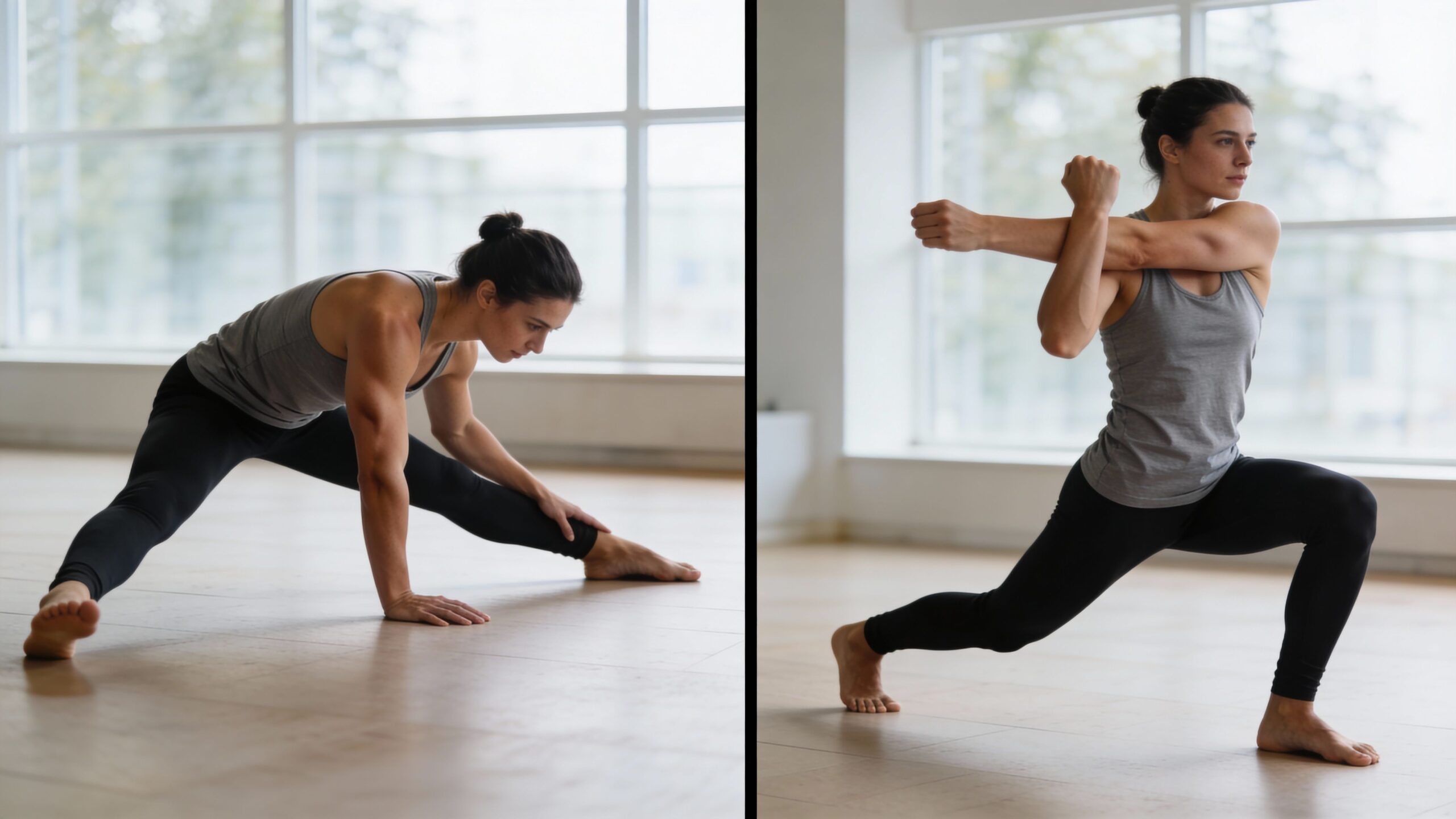
Improving mobility is often framed as a daily stretching obligation, something that requires mats, timers, and long routines that feel more like chores than progress. Yet mobility is not the same as flexibility, and better movement does not demand that you stretch every single day. In fact, many people see more lasting improvements by focusing on how they move, load, and recover rather than forcing static stretches into already busy schedules. Mobility is ultimately about control, coordination, and joint resilience, and those qualities can be developed through smarter movement choices woven into everyday life.
A: Build end-range strength with controlled reps and holds—your range becomes “usable,” not temporary.
A: Do 2 minutes of gentle joint circles + deep nasal breathing + a few squats/hinges.
A: Before: brief prep for the joints you’ll train. After: longer holds/controlled work if you have time.
A: Rolling can help you feel ready, but controlled movement creates lasting change.
A: Reduce depth, widen stance slightly, work hip rotation control, and strengthen glutes through range.
A: Aim for 2–4 focused days plus short daily movement snacks.
A: It can be, but add strength elements (holds, slow lowers, loaded ranges) for better carryover.
A: You gained passive range; make it stick by training strength and control at the new end range.
A: Ankles, hips (rotation), thoracic spine, and shoulders—these drive most movement quality.
A: If you have sharp pain, swelling, numbness/tingling, or symptoms that radiate—get assessed.
Rethinking Mobility: Why Stretching Isn’t the Whole Story
Mobility is the ability to move freely, actively, and with control through a joint’s available range of motion. Stretching primarily targets passive flexibility, which is how far a muscle can be pulled when relaxed. While flexibility has its place, mobility depends on strength, nervous system coordination, joint health, and movement awareness. This is why someone can be very flexible yet still feel stiff or unstable during real-world movements.
When you rely exclusively on stretching, especially long static holds, you may temporarily increase range of motion without improving your ability to control that range. The body often responds by tightening back up, especially if it senses instability. True mobility improvements occur when your nervous system trusts that you can move safely and powerfully in new ranges, which is built through active movement rather than constant stretching.
One of the most overlooked mobility strategies is simple movement frequency. Joints thrive on regular motion, not occasional long sessions. Short bouts of movement spread throughout the day signal to the body that range of motion is useful and safe. This can be as simple as standing up frequently, changing positions, or walking with intention rather than remaining static for hours.
Modern stiffness is often less about tight muscles and more about prolonged stillness. Hips, shoulders, and spines lose their sense of freedom when they are held in the same positions all day. By varying how you sit, stand, and walk, you gently restore joint lubrication, muscle responsiveness, and neural coordination without ever lying down to stretch.
Strength Training as a Mobility Tool
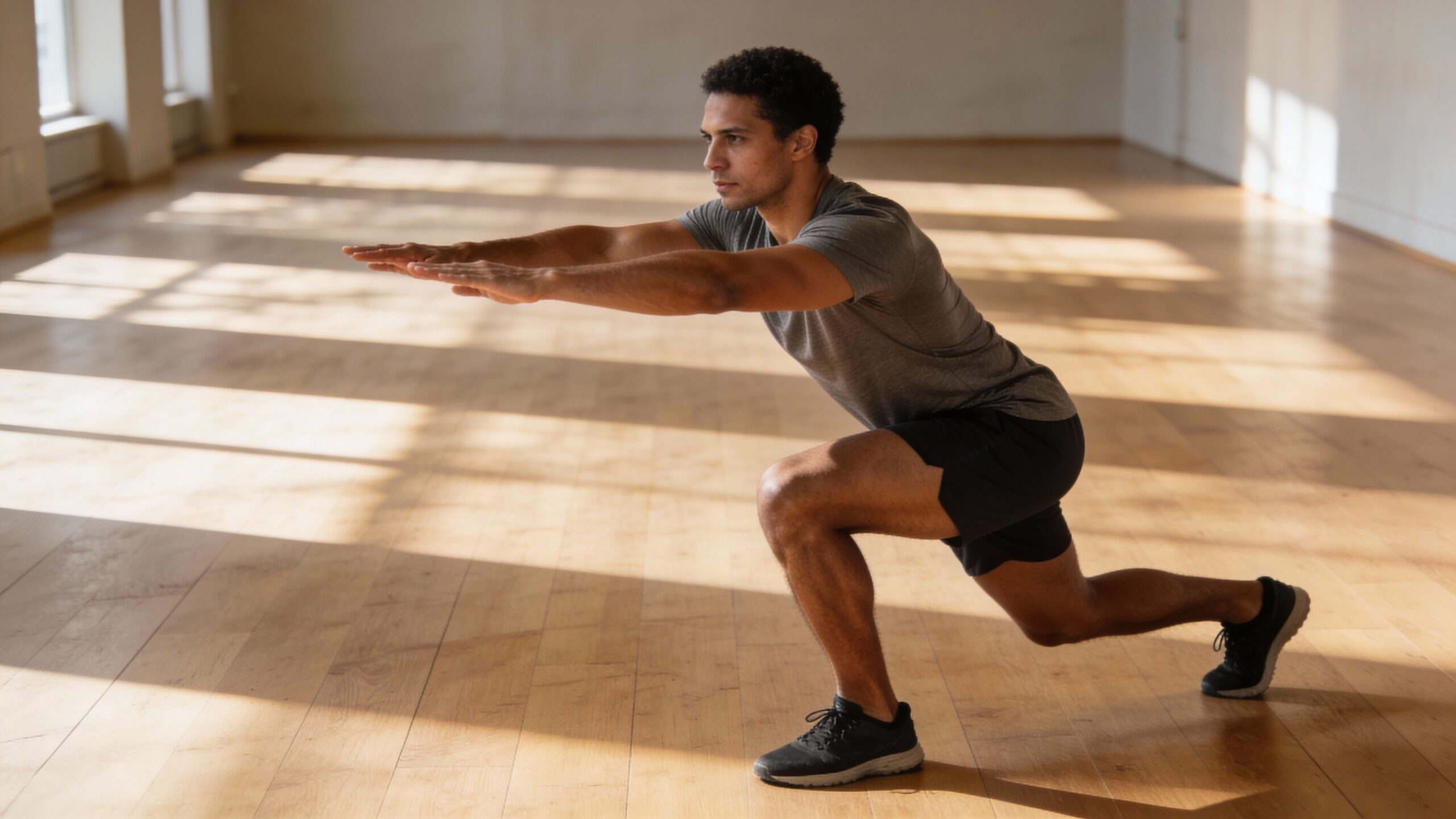
Strength training, when performed through full and controlled ranges of motion, is one of the most effective ways to improve mobility without daily stretching. Exercises that load joints in deep, natural positions teach your body to own those ranges instead of avoiding them. A controlled squat, for example, can do more for hip and ankle mobility than a dozen isolated stretches.
When muscles are strengthened at longer lengths, the nervous system becomes comfortable allowing access to those positions. This reduces protective tension and improves joint stability. Over time, movements that once felt restricted begin to feel smooth and powerful, not because the muscles were pulled longer, but because they were trained to work there.
Using Daily Activities to Restore Natural Range of Motion
Everyday tasks offer powerful mobility opportunities when approached intentionally. Walking, carrying groceries, climbing stairs, or even reaching overhead can reinforce healthy joint motion if done with awareness. Small changes in how you perform daily movements can accumulate into meaningful mobility gains.
For example, walking with longer strides and relaxed arm swings encourages hip extension and thoracic rotation. Carrying uneven loads, such as a bag on one side, challenges core stability and shoulder control. These natural, functional movements remind the body how it was designed to move, often with greater carryover than isolated flexibility work.
The Role of Breathing in Joint Freedom
Breathing has a surprisingly large impact on mobility. Shallow, chest-dominant breathing keeps the nervous system in a heightened state, which increases muscular tension throughout the body. When breathing becomes slow, deep, and controlled, muscles naturally relax and joints move more freely.
Improving breathing patterns can instantly improve how your spine, ribs, and shoulders move. When the diaphragm functions properly, it coordinates with the core muscles to stabilize the spine while allowing smooth motion. This balance of stability and relaxation is central to mobility, and it can be trained simply by paying attention to how you breathe during movement and rest.
Mobility is deeply connected to recovery. Poor sleep, chronic stress, and inadequate nutrition all increase muscle tone and reduce joint freedom. When the body is under constant stress, it prioritizes protection over movement, which often feels like stiffness.
Improving sleep quality, managing stress, and allowing time for recovery can significantly improve how your body moves without adding any extra exercises. When recovery improves, the nervous system becomes more adaptable, muscles release unnecessary tension, and joints regain their natural fluidity. Mobility often returns not because of what you added, but because of what you removed.
Why Consistency Beats Intensity for Long-Term Mobility
Mobility gains are not built through occasional intense efforts but through consistent exposure to varied movement. Doing a little every day, even unintentionally, reinforces joint health far more effectively than sporadic stretching sessions. The body responds best to regular, low-stress signals that movement is safe and useful.
This approach also makes mobility sustainable. When movement is integrated into training, work, and daily life, it stops feeling like a separate task. Over time, stiffness fades not because it was fought aggressively, but because the body no longer feels the need to hold it.
Redefining Mobility as a Way of Living
The most effective way to improve mobility without stretching every day is to stop thinking of mobility as a routine and start seeing it as a lifestyle. Movement quality, variety, strength, breathing, and recovery all work together to create joints that move well and feel resilient. When mobility is built into how you train, work, and rest, it becomes effortless. You no longer chase flexibility; it emerges naturally as a byproduct of a body that feels safe, strong, and capable in motion. This shift not only improves how you move but also how you feel, making mobility a permanent feature of your life rather than another box to check.