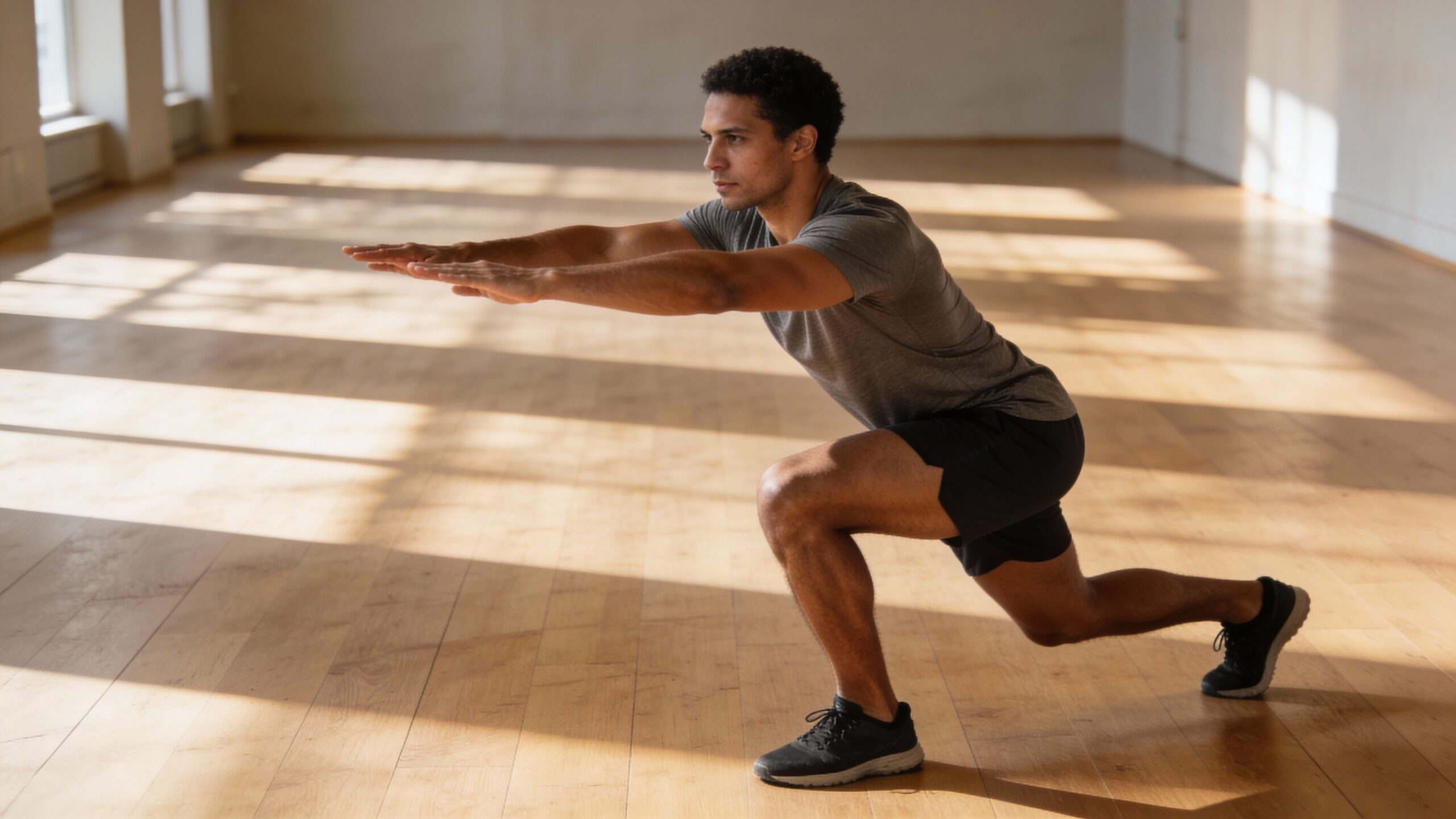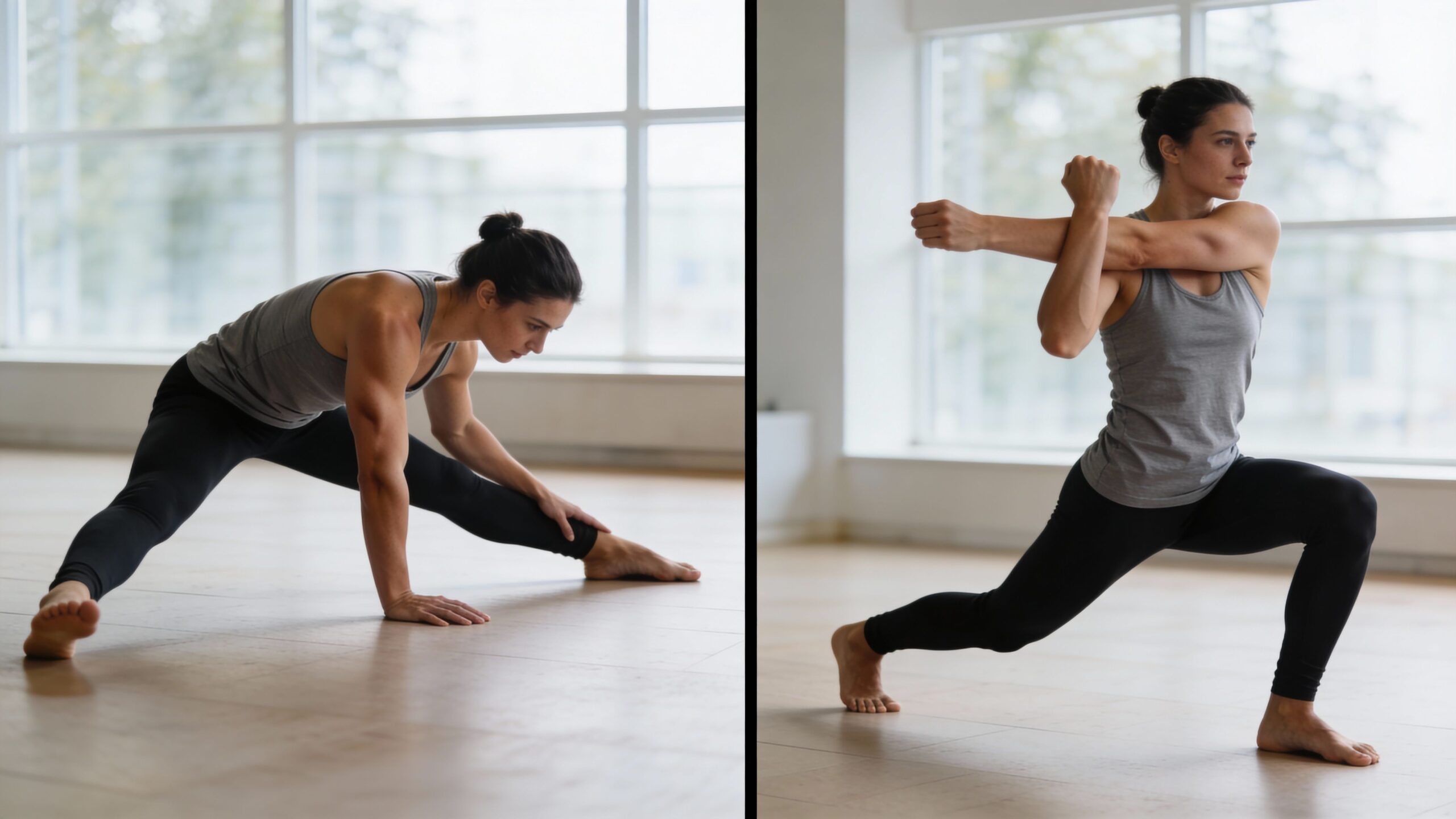
Mobility and flexibility are often used interchangeably, but they describe very different qualities of movement. This confusion has led many people to chase flexibility when what they actually need is better mobility. Touching your toes, holding deep stretches, or achieving impressive ranges of motion may look like signs of healthy movement, yet these abilities do not always translate into strength, control, or pain-free motion in daily life. The real distinction lies in how the body uses range of motion. Flexibility focuses on how far a muscle can lengthen, usually in a passive state. Mobility, on the other hand, describes how well you can actively move and control your joints through those ranges. Understanding this difference is the first step toward training your body in a way that improves performance, reduces discomfort, and supports long-term joint health.
A: Not always—mobility can improve range and control together. Stretch if it helps you feel better or prepares you for a specific position.
A: Often it’s a stability issue—your body tightens up to protect you. Build end-range strength and control.
A: Slow full-range strength lifts + short end-range holds for ankles, hips, T-spine, and shoulders.
A: Long intense stretches right before maximal lifting can reduce output temporarily—do mobility prep instead, or stretch after.
A: Keep it, but pair it with control work so your new range becomes usable and stable.
A: 8–15 minutes is plenty. Consistency matters more than long sessions.
A: If you can reach range passively but can’t control it actively, it’s usually instability → mobility strength work.
A: Ankles and hips are the usual game-changers, then thoracic spine and shoulders.
A: Back off depth, slow down, change stance/angle, and strengthen around the range you can own.
A: If you have sharp pain, swelling, numbness/tingling, or radiating symptoms—get assessed.
What Flexibility Really Means for the Body
Flexibility refers to the ability of muscles and connective tissues to lengthen when external force is applied. This is most commonly trained through static stretching, where a position is held for a period of time to increase muscle length. Flexibility can be helpful in certain contexts, especially when muscles are chronically shortened or when temporary increases in range of motion are needed.
However, flexibility alone does not guarantee healthy movement. A flexible muscle without strength or coordination can leave joints vulnerable. This is why some people who stretch frequently still experience stiffness, instability, or recurring injuries. Their muscles may be long enough, but the nervous system does not trust those ranges because they are not supported by strength or control.
Defining Mobility as Active Control and Freedom
Mobility is the ability to move actively through a joint’s full range of motion with strength, coordination, and stability. It is not just about reaching a position, but about owning it. Mobility integrates muscles, joints, and the nervous system into one functional system that allows movement to feel smooth and confident.
Unlike flexibility, mobility is highly task-specific. A joint may be mobile in one direction and restricted in another. Mobility also adapts based on how you move regularly. If your daily life or training reinforces certain patterns while neglecting others, your mobility will reflect those habits. This is why mobility training focuses on movement quality and control rather than simply increasing range.
Why Being Flexible Doesn’t Always Mean Moving Well
It is possible to be very flexible and still move poorly. Many people with high flexibility struggle with joint stability, balance, or strength at the ends of their ranges. This can lead to compensations, where other joints or muscles take on extra load to protect weaker areas.
When flexibility outpaces control, the body often responds by creating tension elsewhere. Tightness in one area is frequently the nervous system’s attempt to stabilize a lack of control in another. This explains why stretching a tight muscle does not always solve the problem and can sometimes make it worse. Without improving how the body manages movement, flexibility gains may not stick or may even increase injury risk.
How the Nervous System Separates Mobility From Stretching
The nervous system plays a central role in determining how much range of motion the body allows. It prioritizes safety over flexibility, tightening muscles when it perceives instability or threat. Stretching temporarily reduces this protective response, but unless the nervous system learns that new ranges are safe, it will often revert back to restriction.
Mobility training works with the nervous system rather than against it. By slowly introducing controlled movement and strength in new ranges, the body learns that those positions are stable and useful. This creates lasting change, as the nervous system no longer feels the need to restrict motion. This is why mobility improvements tend to be more durable than flexibility gains achieved through stretching alone.
The Role of Strength in True Mobility
Strength is a cornerstone of mobility. Without sufficient strength, range of motion becomes passive and unreliable. Mobility training strengthens muscles at longer lengths and in varied positions, teaching the body to produce and control force throughout a joint’s range.
This type of strength is different from lifting heavy weights through partial ranges. It emphasizes control, tempo, and awareness. Over time, strength-based mobility improves joint resilience and movement efficiency. Daily activities feel easier because the body is prepared to handle real-world demands rather than just isolated stretches.
When Flexibility Still Has a Place
Flexibility is not useless, and it still has a role within a well-rounded movement practice. Stretching can help reduce short-term stiffness, improve relaxation, and prepare the body for rest or recovery. It can also be helpful in specific situations where muscle length is clearly limiting movement.
The key is understanding that flexibility should support mobility, not replace it. Stretching works best when paired with active movement and strength. When flexibility gains are reinforced through controlled motion, they are more likely to last and contribute to better overall movement quality.
Choosing the Right Approach for Your Goals
Whether you should focus more on mobility or flexibility depends on your goals, lifestyle, and movement history. For most people, especially those who feel stiff despite stretching regularly, mobility training offers greater long-term benefits. It improves how the body moves as a system rather than addressing isolated muscles.
Athletes, desk workers, and active individuals alike benefit from mobility because it translates directly to performance and daily comfort. Instead of asking how flexible you are, a better question is how well you move. Mobility answers that question by emphasizing function, control, and adaptability.
Rethinking Movement for Long-Term Health
The real difference between mobility and flexibility is not just technical, but philosophical. Flexibility focuses on range, while mobility focuses on capability. One asks how far you can go, the other asks how well you can move once you get there. By shifting attention toward mobility, movement becomes more sustainable and empowering. Joints feel supported rather than strained, and motion feels confident rather than forced. Understanding this distinction allows you to train smarter, move better, and build a body that feels capable not just today, but for years to come.