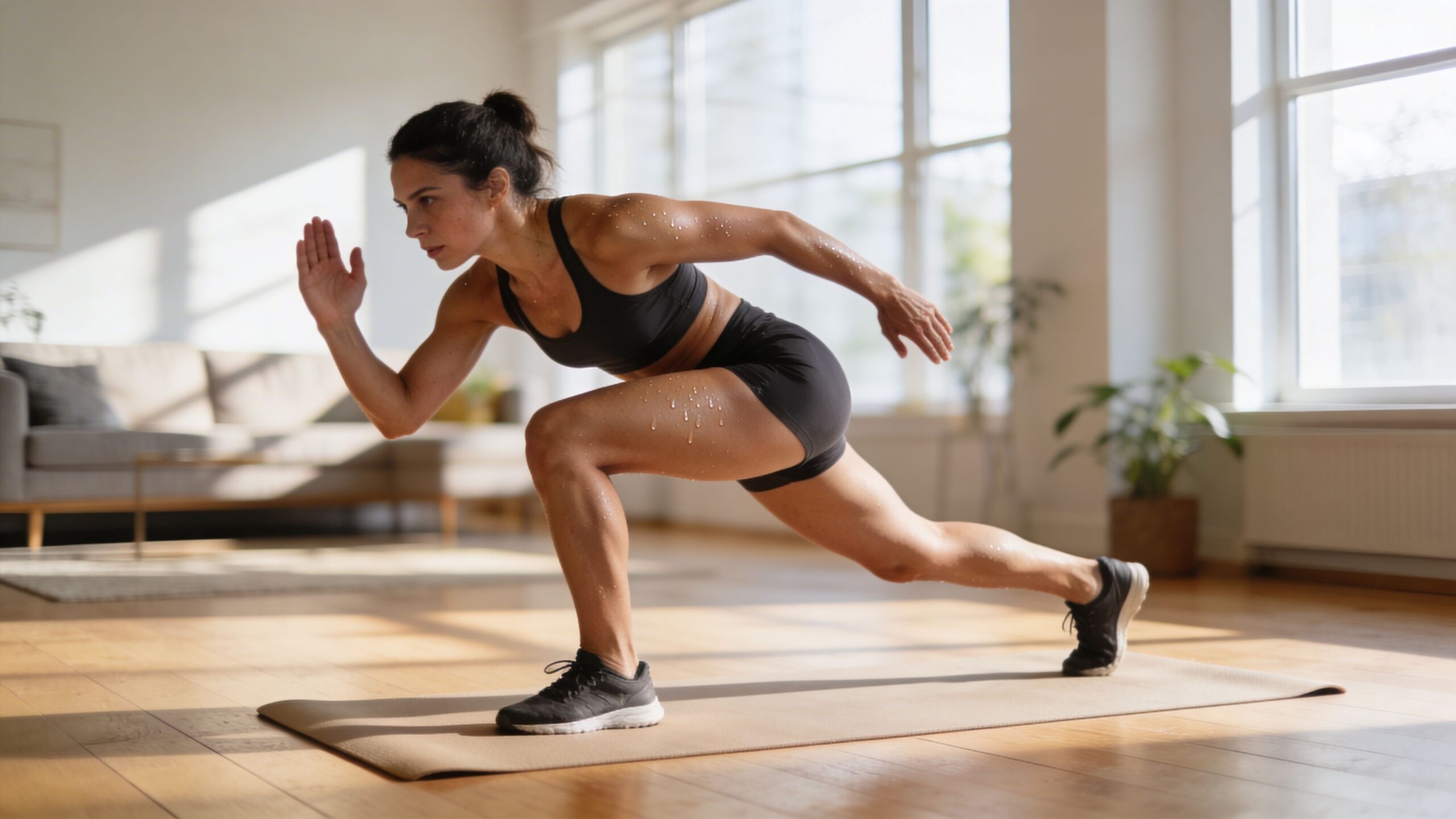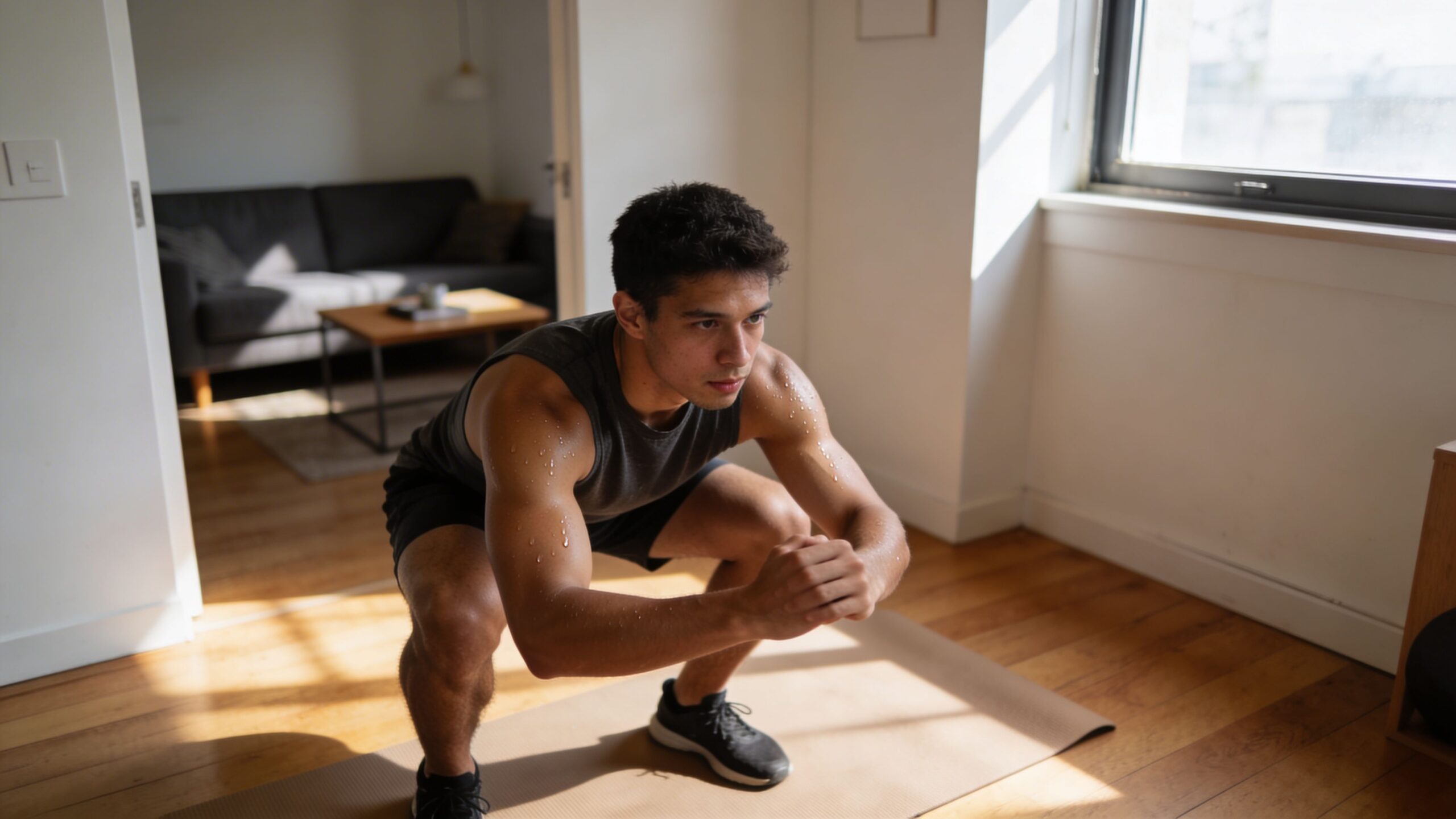
A home workout routine for beginners that actually works does not begin with extreme intensity or complicated programming. It begins with consistency. In a world filled with flashy transformations and overwhelming fitness advice, the most powerful thing a beginner can do is commit to simple, repeatable movement at home. You do not need a fully equipped gym. You do not need expensive gear. What you need is a clear plan, a realistic schedule, and exercises that train your entire body in a balanced way. For beginners, the goal is not perfection. The goal is progress. Your body adapts quickly when you give it the right stimulus. With the right structure, you can build strength, burn fat, improve posture, increase stamina, and feel more confident without ever stepping into a crowded gym. This guide will walk you through a complete, effective home workout routine designed specifically for beginners. It is practical, sustainable, and built to deliver real results.
A: Start with 3 days/week strength (full-body). Add light walking/mobility on off days if you want more.
A: Use bodyweight + a backpack for load, plus a chair for incline push-ups and step-ups. Bands are the best first upgrade.
A: Many feel better in 1–2 weeks. Visible changes often show in 4–8 weeks with consistent workouts and nutrition.
A: Mild soreness is fine—do a lighter session. Sharp pain or worsening pain is a stop-and-adjust signal.
A: Finish most sets with 2–4 reps “in the tank.” If you could do 10 more reps, it’s too easy.
A: Full-body sessions with squat/hinge/push/pull/core, repeated for 4–8 weeks with small weekly progress.
A: Not required to start, but 20–30 minutes of brisk walking 2–4 times/week helps endurance and recovery.
A: Start with incline push-ups on a counter or bench, then lower the incline over time.
A: Use controlled reps, progress slowly, keep workouts short, and stop any movement that causes sharp pain.
A: Changing routines too often. Repeat the same plan long enough to improve, then adjust one variable at a time.
The Foundation: What Makes a Home Workout Routine Actually Work
The reason many beginners fail is not because they lack motivation. It is because they lack structure. A home workout routine that works is built around three principles: progressive overload, full-body training, and recovery.
Progressive overload simply means gradually challenging your muscles more over time. This can mean adding repetitions, increasing time under tension, improving form, or slowing down the movement. Your body changes only when it is asked to do slightly more than it did before.
Full-body training is especially effective for beginners. Instead of isolating tiny muscle groups on different days, beginners benefit from training the entire body three to four times per week. This approach builds strength faster, burns more calories, and improves coordination.
Recovery is often overlooked. Your muscles grow and adapt when you rest, not when you exercise. A good beginner home workout plan includes rest days, mobility work, and enough sleep. Without recovery, progress stalls.
When these three elements are combined, your home workouts become powerful and efficient. You no longer guess. You follow a system.
The Beginner Blueprint: A 3-Day Full-Body Home Workout Plan
For most beginners, three workout days per week is ideal. For example, Monday, Wednesday, and Friday. Each session should take about 30 to 40 minutes. This structure allows you to train hard while still recovering properly.
Each workout should include five key movement patterns: a squat, a push, a pull, a hinge, and a core movement. These patterns cover the entire body and build balanced strength.
A sample beginner home workout routine might look like this in practice.
You begin with bodyweight squats. These strengthen your legs and glutes while improving mobility. Focus on pushing your hips back and keeping your chest tall.
Next, move into push-ups. If full push-ups are too difficult, start with incline push-ups using a countertop or sturdy table. Over time, lower the angle until you can perform them on the floor.
For pulling movements at home, you can use resistance bands or perform towel rows anchored in a door. This strengthens your upper back and improves posture, which is especially important if you sit for long hours.
The hinge movement can be glute bridges or hip thrusts performed on the floor. These strengthen the posterior chain and support lower back health.
Finally, include a core movement such as planks or dead bugs. Focus on bracing your core and breathing properly rather than rushing through the exercise.
Perform each movement for 8 to 12 repetitions, completing three rounds. Rest about 60 seconds between exercises. As you grow stronger, increase repetitions or slow down the tempo to create more challenge.
This is the foundation of a home workout routine for beginners that actually works because it trains the body as a system.
Building Momentum: How to Progress Without Equipment
One of the biggest misconceptions about home workouts is that progress requires heavy weights. In reality, beginners can make dramatic improvements using bodyweight alone.
The key is progression. Once 12 repetitions of an exercise feel easy, you have options. You can slow down the lowering phase of the movement. You can add a pause at the bottom. You can increase total rounds. You can reduce rest time. You can shift to a more advanced variation.
For squats, progression might mean transitioning to split squats or Bulgarian split squats. For push-ups, progression might involve elevating your feet. For glute bridges, you might move to single-leg variations. For planks, you can extend the duration or add movement such as shoulder taps.
Tracking your workouts is critical. Write down your repetitions and sets. Improvement becomes motivating when you can see it on paper. This simple habit turns a random workout into a structured fitness program.
Even adding minimal equipment like resistance bands or a pair of adjustable dumbbells can significantly expand your options. However, they are not required at the beginning. What matters most is mastering your bodyweight first.
The Cardio Component: Burning Fat Without Endless Running
Many beginners believe they need to run for hours to lose weight. While cardio has benefits, it does not need to dominate your routine.
A smart beginner home workout includes short, effective conditioning sessions two to three times per week. These can be added at the end of your strength workouts or done on separate days.
High-intensity interval training can be effective when structured properly. For example, 20 seconds of jumping jacks followed by 40 seconds of rest repeated for eight rounds. Or alternating mountain climbers with rest intervals. The key is effort, not duration.
If high-impact movements feel too intense, low-impact options such as brisk walking, stair climbing, or cycling are excellent choices. The goal is to raise your heart rate and improve cardiovascular fitness without burning out.
Cardio supports fat loss, improves heart health, and increases endurance. Combined with strength training, it accelerates results.
Recovery and Mobility: The Secret Weapon Most Beginners Ignore
A home workout routine for beginners that actually works is not just about pushing harder. It is also about moving better.
Mobility and flexibility training improve joint health and reduce injury risk. Spending 10 minutes after each workout stretching your hips, hamstrings, chest, and shoulders can dramatically improve posture and movement quality.
Incorporate dynamic warm-ups before workouts. Arm circles, leg swings, hip rotations, and light bodyweight movements prepare your muscles and nervous system.
Sleep plays an enormous role in recovery. Aim for seven to nine hours per night. During deep sleep, your body repairs muscle tissue and balances hormones that regulate hunger and fat loss.
Hydration and nutrition also support recovery. Drink enough water and prioritize protein intake to help muscles rebuild. Beginners often underestimate how much diet influences results. You cannot out-train poor nutrition.
When recovery is respected, your energy improves. Workouts feel stronger. Motivation increases. Progress accelerates.
Mindset Matters: Staying Consistent When Motivation Fades
The difference between success and failure in home fitness is rarely knowledge. It is consistency.
Motivation comes and goes. Discipline keeps you moving. Set realistic expectations. You will not transform overnight. But within four weeks of consistent training, you will feel stronger. Within eight weeks, you will see visible change.
Create a designated workout space in your home. Even a small corner with a mat signals that this is your training zone. Schedule workouts in your calendar like appointments. Protect that time.
Remove friction. Lay out your workout clothes the night before. Keep your equipment accessible. The easier it is to start, the more likely you are to follow through.
Celebrate small wins. The first time you complete three full push-ups. The first time you hold a plank for a full minute. These moments build confidence.
Consistency compounds. Missing one workout does not matter. Quitting does.
Sample Weekly Schedule for Beginners
A simple weekly layout keeps you organized and prevents overtraining.
Monday can be full-body strength training. Tuesday can be light cardio or walking. Wednesday returns to strength training. Thursday focuses on mobility or active recovery. Friday is another full-body workout. The weekend can include light activity such as hiking, stretching, or recreational sports.
This rhythm balances effort and recovery. It fits into a busy lifestyle and builds sustainable habits.
As your fitness improves, you can add a fourth strength day or increase intensity. But starting simple increases long-term success.
The Long Game: Turning a Beginner Routine Into a Lifestyle
The ultimate goal of a home workout routine for beginners is not a short-term challenge. It is long-term transformation. Once you build a foundation of strength and endurance, new opportunities open. You might explore advanced calisthenics. You might incorporate heavier resistance training. You might train for a 5K. Your confidence grows because you have proven to yourself that you can commit and improve. Fitness at home removes excuses. It saves time. It builds independence. It teaches you how your body moves and responds. The most effective home workout routine is the one you can sustain for years. It evolves with you. It challenges you appropriately. It respects recovery. And it fits into your real life. Start small. Focus on form. Progress gradually. Stay consistent. A home workout routine for beginners that actually works is not complicated. It is disciplined, balanced, and built on smart fundamentals. When you combine strength training, smart cardio, proper recovery, and a resilient mindset, you create a system that delivers results. You do not need perfection. You need action. And your transformation begins at home.