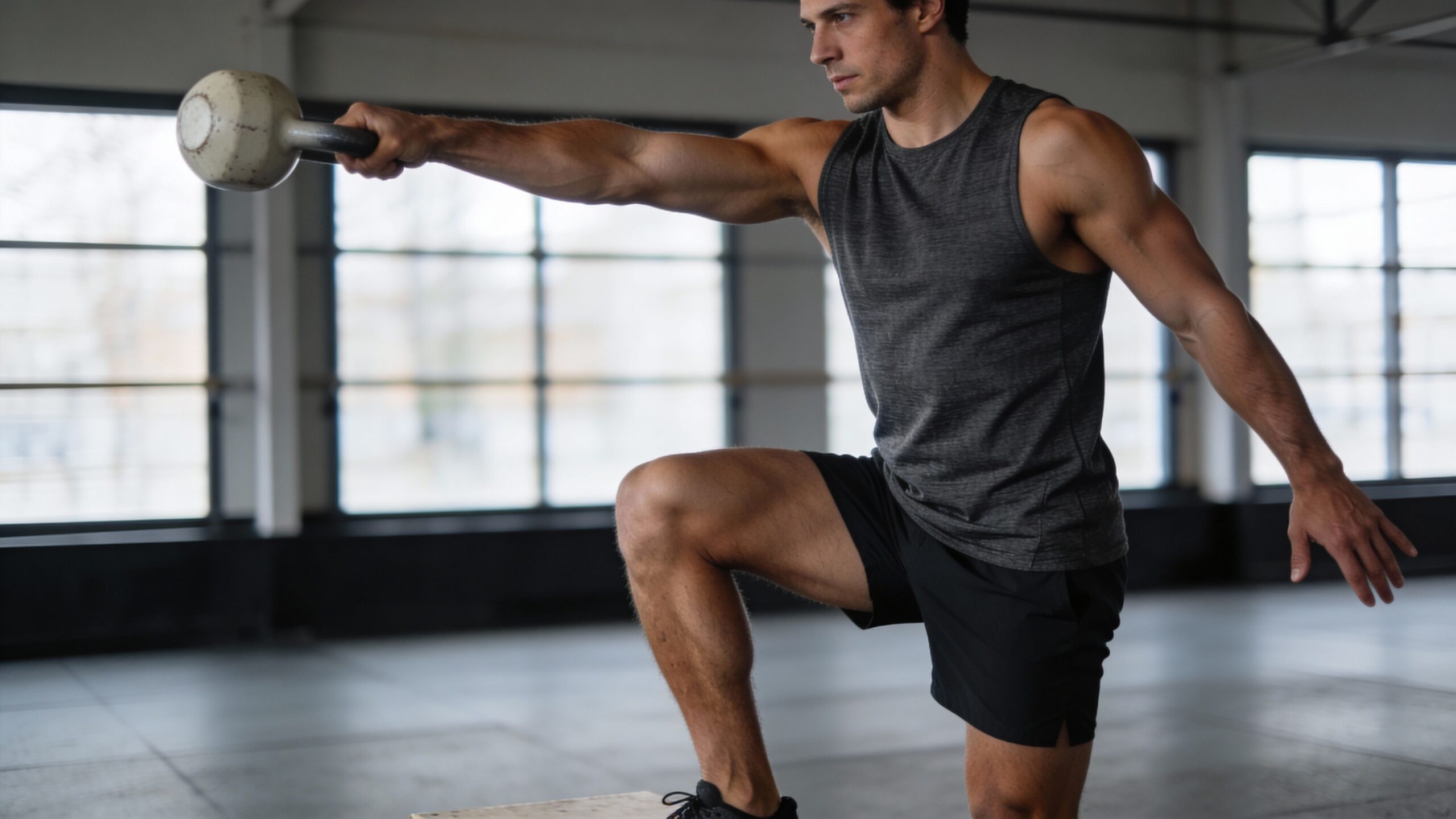
Functional fitness starts with a simple but powerful idea: training should improve how you live, not just how you look or what you lift. Most physical challenges don’t happen under perfect conditions with fixed equipment and predictable movement. They happen when you bend, reach, twist, carry, or stabilize your body in everyday situations. Functional fitness focuses on preparing the body for those realities. It builds strength that feels useful, responsive, and dependable, creating a direct connection between workouts and daily life.
A: Training your body to handle real-life tasks—lifting, carrying, bending, reaching, and moving with control.
A: No—done well, it includes real strength work plus conditioning and movement skill.
A: Not at all—bodyweight, dumbbells, bands, and even machines can be functional if you train the right patterns.
A: 3 days per week is a great starting point; add walking or easy cardio on other days.
A: Squat, hinge, push, pull, carry, and a rotation/anti-rotation drill.
A: It can—better movement, bracing, and gradual progression typically reduce risky compensations.
A: Yes—start with simple patterns, controlled tempo, and moderate loads before adding speed or complexity.
A: Your workouts progress, recovery improves, and daily tasks feel easier and less tiring.
A: Loaded carries are hard to beat for real-life transfer—grip, posture, core, and stamina in one.
A: Going too hard too soon—build consistency and clean movement first, then layer intensity.
Defining Functional Fitness in Plain Terms
At its core, functional fitness is movement-based training designed around real human motion. Instead of isolating individual muscles, it trains patterns the body naturally uses, such as squatting, hinging, pushing, pulling, rotating, and carrying. These patterns require multiple muscles and joints to work together, just as they do outside the gym. Functional fitness is not about flashy exercises or trends. It is about reinforcing how the body was designed to move and strengthening those movements under controlled stress so they become safer, stronger, and more efficient over time.
Why Movement Patterns Matter More Than Muscles Alone
Muscles do not work in isolation during daily life. When you pick something up, your legs, core, back, and arms coordinate to share the load. Functional fitness respects this reality by training the body as an integrated system. This approach improves communication between muscles and enhances joint stability. Over time, movements feel smoother and more confident because the body learns to distribute effort efficiently. Training patterns rather than parts helps reduce compensations that often lead to aches, stiffness, and injury.
The Role of the Core in Everyday Strength
Functional fitness places a strong emphasis on core stability, not for appearance, but for protection and performance. The core acts as the central link between the upper and lower body, transferring force and maintaining balance. In functional training, the core is constantly engaged to stabilize the spine while the limbs move. This creates strength that supports posture, protects the lower back, and enhances power during daily tasks. Whether lifting groceries, climbing stairs, or reaching overhead, a strong and responsive core makes movement safer and more controlled.
Balance, Stability, and Real-World Confidence
One of the most overlooked aspects of fitness is balance, yet it plays a critical role in everyday safety and mobility. Functional fitness often includes movements that challenge balance and coordination in subtle ways. These challenges train the nervous system to react quickly and maintain control when conditions are uneven or unpredictable. As balance improves, confidence follows. Simple activities like walking on uneven surfaces, stepping off curbs, or navigating crowded spaces become easier and less risky. This sense of control over your body enhances independence and freedom of movement.
How Functional Fitness Reduces Injury Risk
Many injuries occur not during intense workouts but during ordinary movements performed under fatigue or distraction. Functional fitness addresses this by strengthening the body in the positions and ranges of motion where injuries are most likely to happen. By gradually exposing joints and muscles to varied stress, the body becomes more resilient. Functional training also improves body awareness, helping people recognize and correct poor movement patterns before they cause problems. This proactive approach builds durability rather than fragility, supporting long-term health and physical confidence.
Functional Fitness for Every Stage of Life
Functional fitness is adaptable, making it suitable for people of all ages and fitness levels. For younger individuals, it builds a foundation of movement quality and coordination. For busy adults, it maintains strength and mobility while supporting daily demands. For older adults, functional fitness plays a vital role in preserving balance, independence, and quality of life. Because exercises can be scaled and modified, functional training evolves with the body rather than working against it. This adaptability makes it a sustainable approach that can support lifelong fitness.
Why Functional Fitness Truly Matters
Functional fitness matters because it aligns training with real life. It shifts the focus from isolated performance metrics to meaningful capability. Strength becomes something you feel and use, not just something you measure. Over time, functional fitness creates a body that moves better, responds faster, and handles daily challenges with ease. It enhances not only physical performance but also confidence, resilience, and quality of life. In a world where movement is essential to independence and well-being, functional fitness stands out as training that truly supports how people live.