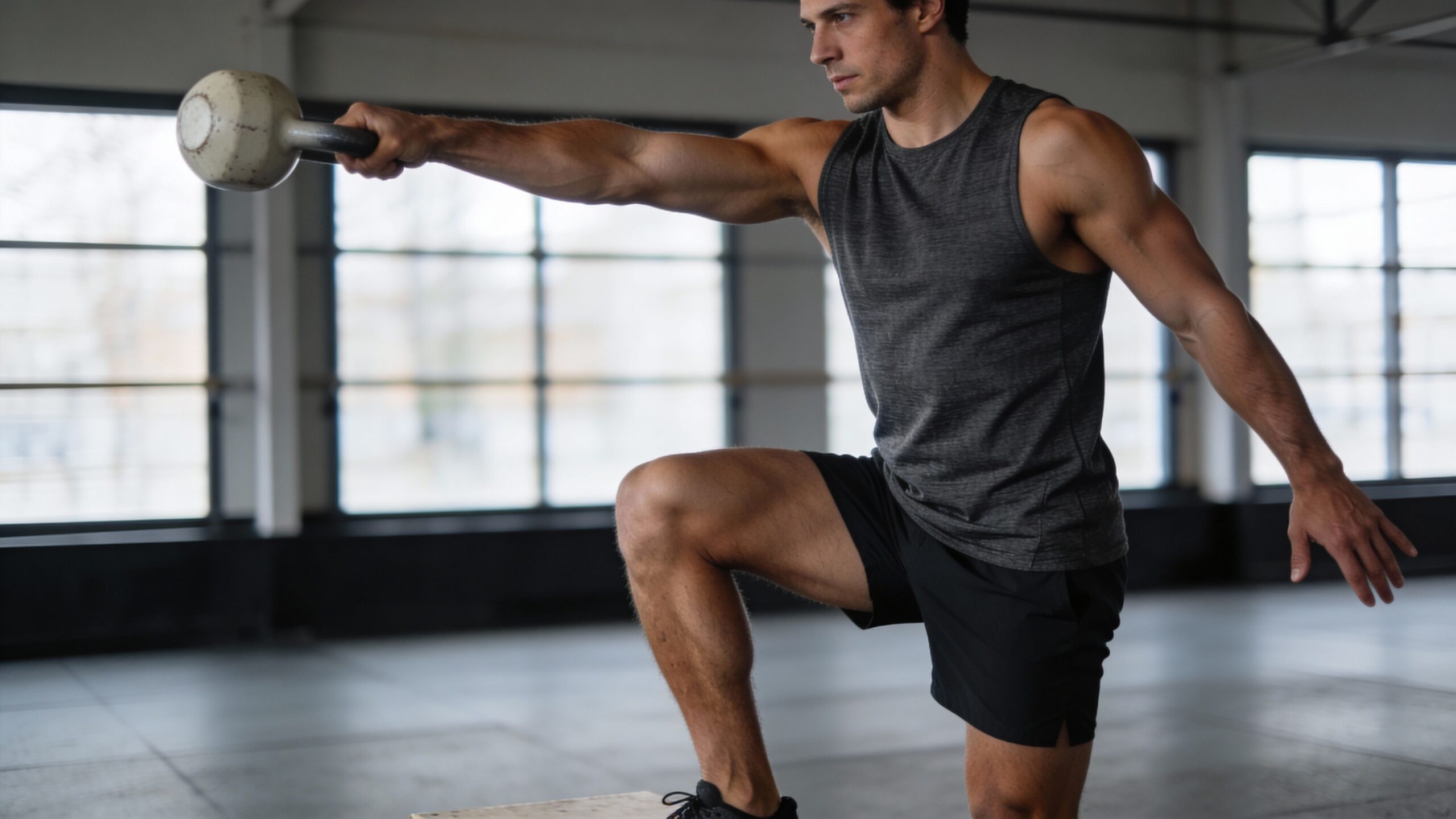
Most injuries don’t happen during extreme workouts or high-risk sports moments. They occur during routine activities like lifting a box, twisting too quickly, slipping on uneven ground, or repeating the same poor movement patterns day after day. Functional fitness addresses injury prevention at its root by improving how the body moves under real-world conditions. Instead of treating injuries as isolated events, functional training looks at the patterns, imbalances, and weaknesses that make injuries more likely in the first place. By strengthening movement quality, the body becomes better prepared to handle the stresses of daily life without breaking down.
A: Nothing prevents all injuries, but it can reduce risk by improving strength, control, and tolerance to common movements.
A: Loaded carries and hinges are top-tier because they train bracing, posture, and real-life lifting mechanics.
A: Modify first—reduce load/range, change the variation, and keep pain low; stop if pain is sharp or worsening.
A: Yes—5 minutes of prep can improve movement quality and reduce early-session strain risk.
A: Most sets should feel challenging but controlled; save true all-out efforts for occasional tests.
A: Emphasize hinging mechanics, bracing drills, anti-rotation, and gradual load progression.
A: Build hips/glutes, use step-ups and split squats, slow tempo, and progress depth and load patiently.
A: 3 days per week works well for most; add walking and mobility micro-sessions on off days.
A: Mobility helps, but strength through range is often the bigger durability driver than stretching alone.
A: Spiking intensity or volume too fast—gradual, repeatable training is the safest path to resilience.
Understanding the Real Causes of Everyday Injuries
Many common injuries are not caused by a lack of strength, but by a lack of coordination, stability, and control. Muscles may be strong individually, yet fail to work together when needed. Joints may move well in one direction but lack control in another. Functional fitness targets these gaps by training the body as an integrated system.
Movements that involve multiple joints and planes of motion expose weaknesses before they become injuries. Over time, this approach builds awareness and resilience, reducing the chance that small stresses turn into major setbacks.
Training Movement Patterns Instead of Isolated Muscles
Traditional training often isolates muscles in fixed positions, which can leave the body unprepared for dynamic, unpredictable movement. Functional fitness shifts the focus to movement patterns that reflect how the body operates outside the gym. Squatting, hinging, pushing, pulling, rotating, and carrying are foundational actions that appear constantly in daily life. When these patterns are trained with proper alignment and control, muscles learn to cooperate rather than compete. This coordination distributes load more evenly across the body, reducing excessive stress on any single joint or tissue.
Joint Stability as a Foundation for Injury Resistance
Joint stability is not about stiffness, but about controlled mobility. Functional fitness develops stability by teaching joints to manage force through a full range of motion. ‘
Instead of locking joints into rigid positions, functional training strengthens the muscles and connective tissues that support smooth, controlled movement. This is especially important for vulnerable areas like the shoulders, knees, hips, and lower back. When joints are stable yet mobile, they are better equipped to absorb impact, adapt to awkward positions, and recover quickly from unexpected stress.
Core Strength That Protects the Spine
The core plays a central role in injury prevention, particularly for the spine. Functional fitness trains the core as a stabilizing system rather than a standalone muscle group. The core’s primary job is to maintain alignment while the limbs move, not to produce excessive motion. Functional exercises reinforce this role by challenging the core to resist rotation, flexion, and extension under load. As core stability improves, the spine becomes better protected during lifting, carrying, and twisting movements. This reduces the risk of lower back injuries that often occur during routine activities.
Balance, Awareness, and Fall Prevention
Loss of balance is a major contributor to injury, especially as people age or become fatigued. Functional fitness incorporates balance challenges that improve proprioception, the body’s ability to sense its position in space. These challenges train the nervous system to react quickly and maintain control when footing is unstable or movement is sudden. Improved balance reduces the likelihood of falls and awkward landings, which are common causes of sprains, fractures, and soft tissue injuries. Over time, increased body awareness builds confidence and reduces hesitation during movement.
One of the most powerful aspects of functional fitness for injury prevention is its use of controlled variability. Instead of repeating the same movement in the same way, functional training introduces slight changes in load, angle, or speed. This prepares the body for the unpredictability of real life. Controlled variability strengthens connective tissues, improves coordination, and enhances adaptability. When the body is accustomed to handling varied demands, it is less likely to fail when faced with unexpected challenges, such as uneven surfaces or sudden changes in direction.
Long-Term Protection Through Smarter Training
Functional fitness supports injury prevention not just in the short term, but across a lifetime. By prioritizing movement quality, joint health, and coordination, it helps preserve physical capacity as the body ages. Functional training encourages consistency by aligning workouts with real-life benefits, making it easier to maintain over time. Rather than chasing extremes, it builds sustainable strength and resilience that protect the body through daily routines, work demands, and recreational activities. In this way, functional fitness becomes more than a training style; it becomes a proactive strategy for long-term health, confidence, and injury-free movement.