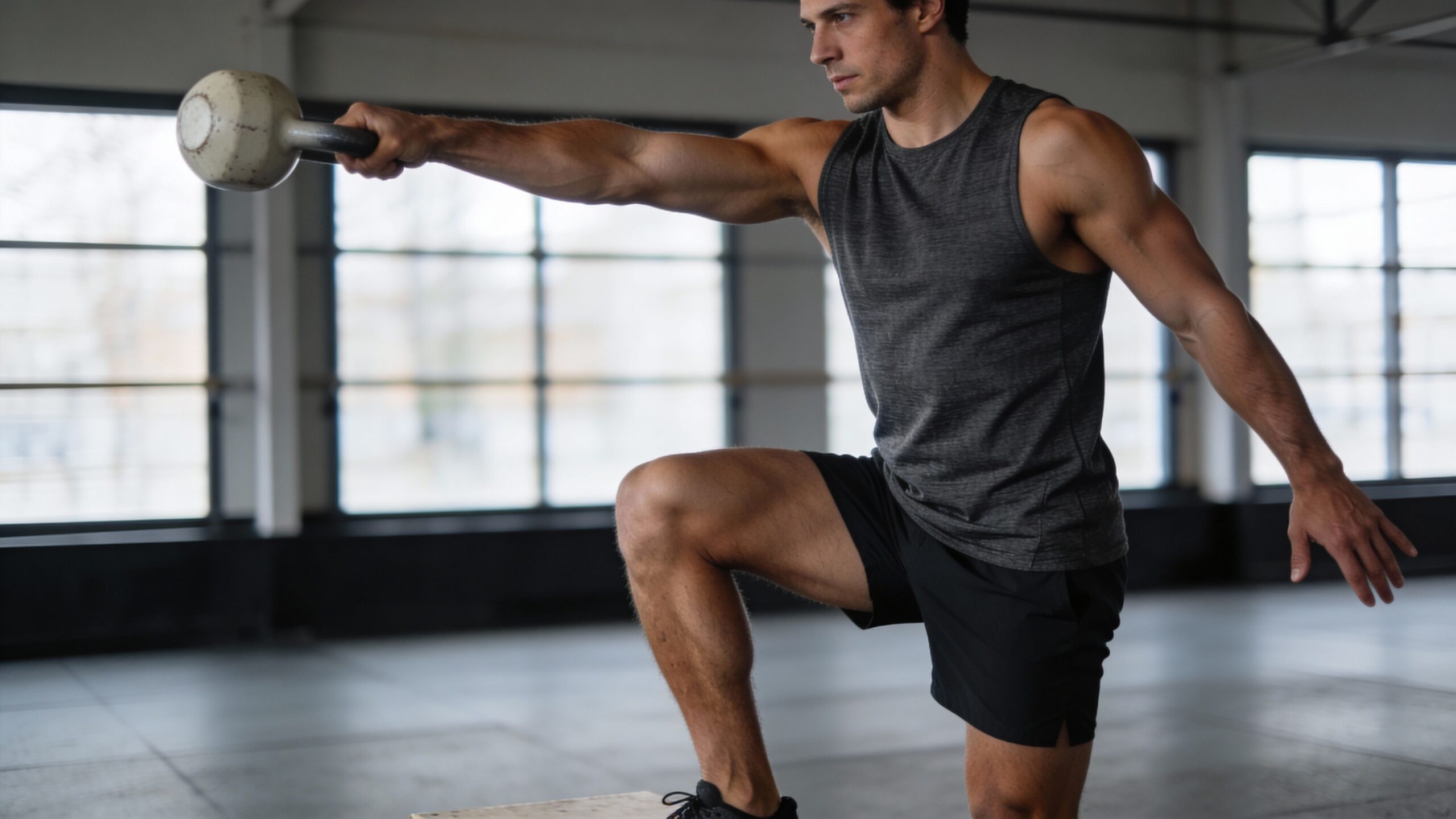
Strength in the real world rarely looks like a perfect rep in front of a mirror. It shows up when you carry groceries up the stairs, lift a child into the air, shovel snow, move furniture, or catch yourself before a fall. Functional fitness is built around this idea: training the body to perform better in everyday life, not just inside the gym. Instead of isolating muscles for appearance alone, functional training focuses on coordinated movement, balance, stability, and power that translate directly into daily tasks. This approach doesn’t replace traditional strength training so much as it refines and elevates it, reshaping how strength feels, moves, and performs beyond the weight room.
A: It prioritizes movement patterns and control that carry into life—lifting, carrying, bracing, and moving well under load.
A: Most people do great with 3–4 strength-focused days plus 1–2 easier conditioning or walking days.
A: Not always—tempo, range, and carries can build real strength; heavier loads help once technique is solid.
A: Squat pattern, hinge pattern, push, pull, carry, and a rotation/anti-rotation drill.
A: Hinge at the hips, brace your midsection, keep the load close, and avoid twisting while lifting.
A: Reduce range, slow the tempo, strengthen glutes/hamstrings, and try split squats/step-ups while you build capacity.
A: Yes—easy cardio supports recovery and stamina; brief hard efforts can be added once your base is steady.
A: If soreness is constant, sleep worsens, performance drops, and motivation tanks—pull back volume and prioritize recovery.
A: A short carry + squat + push circuit (3–8 minutes) with perfect form and controlled breathing.
A: Keep it repeatable—same training days each week, basic movement patterns, and small progressions you can sustain.
What Functional Fitness Really Means
Functional fitness is often misunderstood as a trend or a softer alternative to heavy lifting, but in reality it is a deeply practical and demanding style of training. At its core, it trains movements rather than muscles. Squatting, hinging, pushing, pulling, rotating, and carrying are patterns the body uses constantly, and functional workouts are designed to improve these patterns under load and fatigue. This makes strength more adaptable and usable, rather than limited to a specific machine or exercise. When you train functionally, your body learns how to stabilize joints, coordinate muscles, and generate force in ways that feel natural and efficient.
Everyday Strength Starts With Movement Quality
One of the most transformative aspects of functional fitness is its emphasis on how you move, not just how much you lift. Poor movement patterns often develop from long hours of sitting, repetitive tasks, or imbalanced training. Functional training addresses these issues by reinforcing proper alignment, joint control, and full-body coordination. Over time, movements like bending down, standing up, reaching overhead, or twisting become smoother and safer. This improved movement quality reduces wear and tear on the body and helps prevent injuries that commonly occur during ordinary activities, not extreme workouts.
Core Strength That Actually Protects You
In functional fitness, the core is not treated as a standalone muscle group but as a stabilizing system that connects the upper and lower body. Almost every functional movement requires the core to brace, rotate, or resist movement to keep the spine stable. This kind of core strength is subtle but powerful. It improves posture, protects the lower back, and allows the limbs to produce more force without strain.
The result is a body that feels solid and controlled during daily tasks, whether you are lifting something awkward, carrying uneven loads, or moving quickly in unpredictable situations.
Balance, Stability, and Confidence in Motion
Functional fitness places a strong emphasis on balance and stability, two qualities that are often overlooked until they are lost. Training that challenges balance, whether through single-leg movements, uneven loads, or changes in direction, teaches the nervous system to react quickly and efficiently. This translates into better coordination and confidence in everyday movement. Walking on uneven ground, stepping off a curb, or navigating crowded spaces becomes easier and safer. Over time, this kind of training builds trust in your body, reducing hesitation and fear of movement that can limit activity and independence.
Strength That Transfers Beyond the Gym
One of the most compelling benefits of functional fitness is how clearly its gains transfer into real life. Traditional gym strength can sometimes feel trapped within the exercises that built it, but functional strength shows up everywhere. Carrying heavy bags feels less taxing, household chores require less effort, and recreational activities become more enjoyable. Even mental resilience improves, as training the body to handle varied and unpredictable challenges builds adaptability and problem-solving under stress. This transferability is what makes functional fitness so appealing to people who want their workouts to enhance life, not just physique.
Functional training is uniquely suited to support strength and mobility at every age. For younger individuals, it builds a strong foundation of movement skills and injury resistance. For adults juggling work, family, and physical demands, it maintains energy and resilience while reducing aches and stiffness. For older adults, functional fitness is one of the most effective ways to preserve independence, balance, and confidence. Because it can be scaled and adapted, functional training meets the body where it is and grows with it, making it a lifelong approach rather than a temporary program.
Building a Body That Works for You
Functional fitness ultimately transforms the relationship you have with your body. Strength stops being about isolated achievements and starts becoming about capability, reliability, and freedom of movement. Training feels purposeful, connected, and relevant to daily life. Over time, the benefits compound, creating a body that not only looks strong but moves with ease, responds quickly, and supports you through the demands of real-world living. This is the quiet power of functional fitness: strength that doesn’t just exist in theory, but shows up when it matters most.