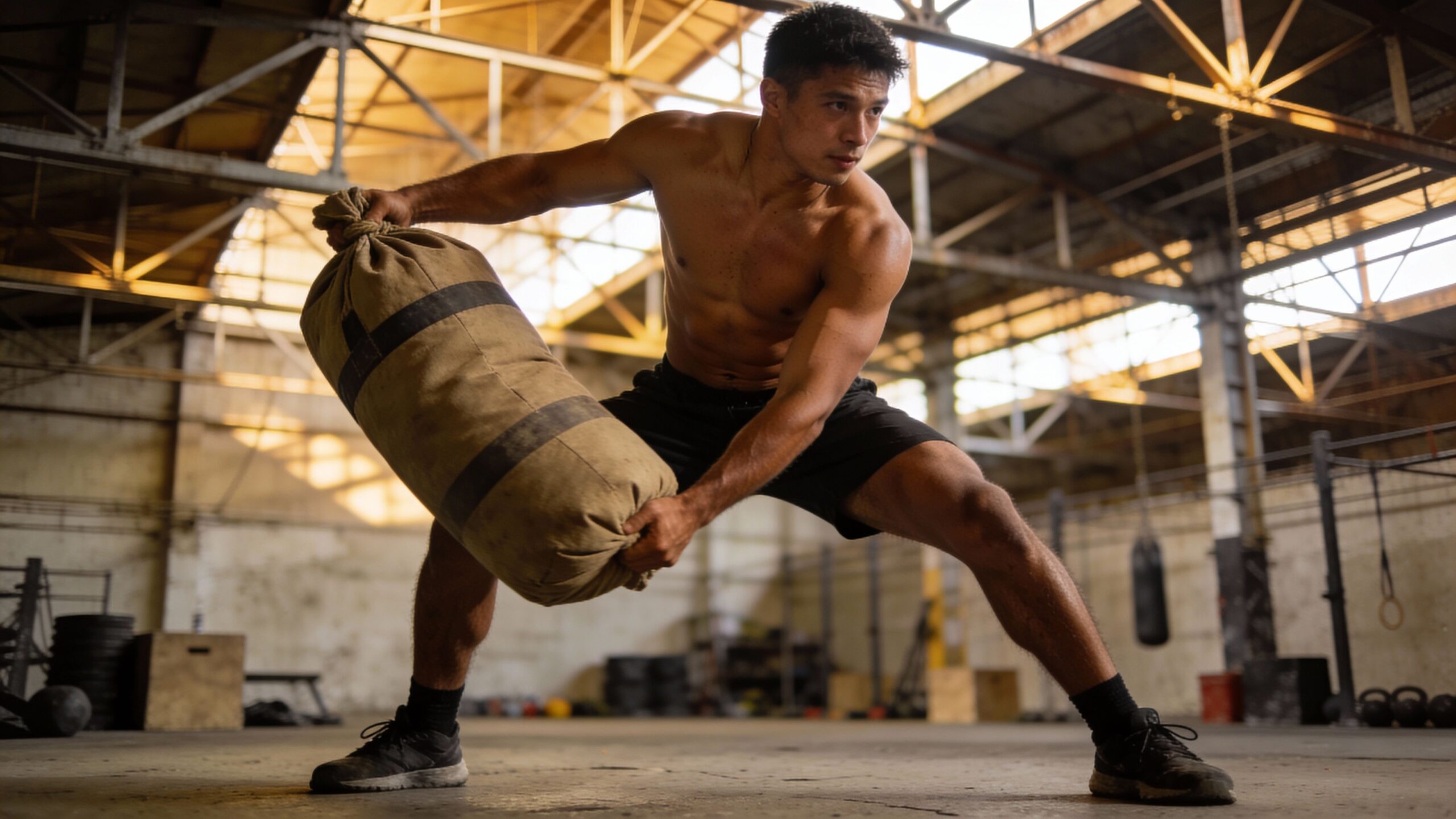
Most people don’t get injured or exhausted doing extreme things. They tweak a back picking up laundry, strain a shoulder reaching overhead, or lose balance stepping off a curb. Functional fitness workouts are designed around this reality. Instead of chasing isolated muscle fatigue or aesthetic goals alone, functional training builds strength that supports the movements you repeat every day. These workouts improve how your body bends, lifts, twists, carries, and stabilizes under real-world conditions. The result is not just better fitness, but a noticeable improvement in how daily life feels, from chores and work tasks to recreation and recovery.
A: Loaded carries—because they combine posture, grip, bracing, and steady movement like real life.
A: Start with a main pattern (squat/hinge), add a push + pull, then finish with carries or conditioning.
A: Yes—hinge practice, bracing drills, and carries build stability and better lifting habits.
A: Pick 2–3 moves (hinge + push + carry) and cycle them with short rests—done.
A: No—functional doesn’t mean chaotic. Controlled strength + smart conditioning is the goal.
A: Use loads that challenge you while keeping form crisp; progress slowly and regularly.
A: Start light, walk tall, ribs down, steady breath, and stop before your grip collapses.
A: 3 days per week is a sweet spot for most—add walks or easy cardio on other days.
A: Train control first (anti-rotation), then add gentle rotation with good posture and no pain.
A: Daily tasks feel lighter—stairs, carrying bags, standing up, and bending down all get smoother.
Movement-Based Workouts That Build Real Strength
Functional fitness workouts prioritize movement patterns over individual muscles. Squats mirror standing up and sitting down. Hinges reflect picking objects up from the ground. Pushes and pulls resemble opening doors, lifting boxes, or pulling yourself upward. When these movements are trained together, the body learns to distribute effort efficiently across multiple joints and muscle groups. This type of strength feels smoother and more coordinated than machine-based strength because it mirrors how the body is meant to work. Over time, everyday tasks require less conscious effort because the body has rehearsed those patterns under controlled stress.
Core Stability That Carries Over Everywhere
In functional workouts, the core is active almost all the time. Rather than isolating it for short bursts, these workouts train the core to brace, rotate, and stabilize while the arms and legs move. This reflects how the core functions in daily life, acting as a transmission system that transfers force between the upper and lower body.
As this type of core strength improves, posture naturally becomes more upright, lower back discomfort often decreases, and movements feel more secure. Whether carrying groceries, lifting a child, or loading equipment into a car, the body feels more supported and capable.
Balance and Coordination in Motion
Functional fitness workouts often challenge balance and coordination in subtle but powerful ways. Single-leg movements, uneven loads, and changes in direction train the nervous system to respond quickly and efficiently. This is not about performing circus-style tricks, but about teaching the body to stay stable when conditions are imperfect. In daily life, surfaces are uneven, loads are awkward, and movements are rarely symmetrical. Functional workouts prepare the body for these realities, improving confidence and reducing the risk of falls or missteps. The ability to move smoothly through space becomes a skill, not an afterthought.
Conditioning That Matches Real-World Demands
Unlike traditional cardio that isolates endurance from strength, functional fitness blends the two. Workouts often involve short bursts of effort followed by controlled recovery, mimicking how energy is used in daily life. Carrying something heavy across a parking lot, climbing stairs with a load, or working physically for several minutes requires both strength and conditioning at the same time. Functional workouts train this overlap, improving work capacity without sacrificing movement quality. Over time, daily activities feel less draining, and recovery between efforts becomes faster and more efficient.
One of the strengths of functional fitness is its adaptability. These workouts can be performed in a gym, at home, outdoors, or in small spaces with minimal equipment. Because the focus is on movement rather than machines, exercises can be adjusted to fit individual ability levels, injuries, or lifestyle constraints. This makes functional fitness sustainable over the long term. As life circumstances change, the workouts evolve with them. Whether training intensely or maintaining baseline fitness during busy periods, functional workouts remain relevant and effective.
Injury Resistance Through Smarter Training
Functional fitness workouts help reduce injury risk by strengthening the body in the positions and ranges of motion where injuries commonly occur. Instead of avoiding challenging angles or loads, functional training introduces them gradually and intentionally. Joints learn to stabilize, muscles learn to cooperate, and connective tissues adapt to varied stress. This proactive approach builds resilience rather than fragility. When unexpected movements happen in daily life, the body is better prepared to handle them without breaking down.
Strength That Makes Life Feel Easier
The true success of functional fitness workouts is measured outside the gym. Tasks that once felt tiring or risky become manageable. Movement feels more fluid, confidence increases, and physical limitations shrink. Rather than training for performance in a narrow set of exercises, functional fitness trains the body for life itself. Over time, the cumulative effect is a body that works with you instead of against you, supporting your routines, responsibilities, and passions with strength that shows up when it matters most.