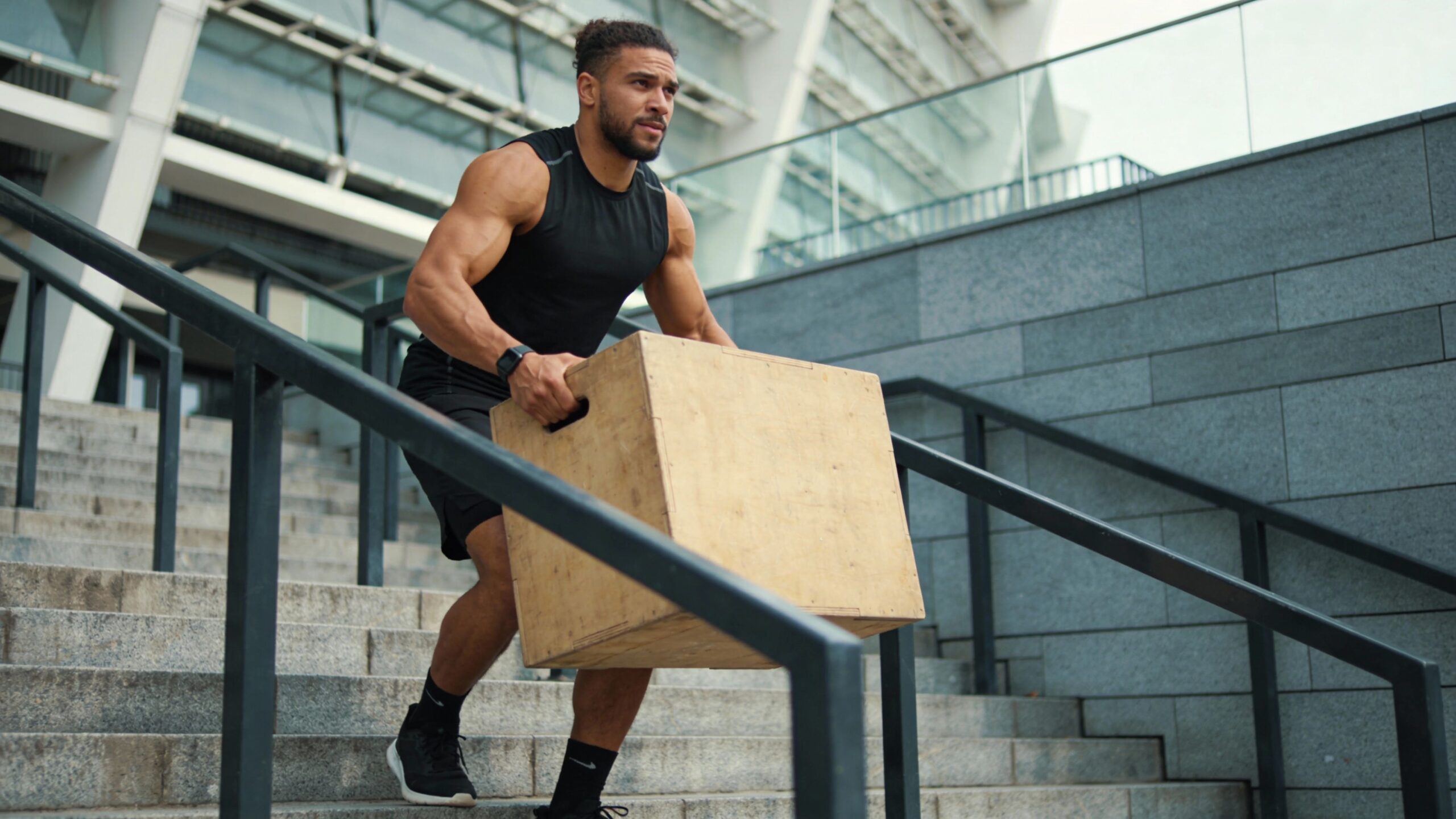
Functional fitness does not require a fully equipped gym or rows of machines. In many ways, the home is the most natural environment for functional training because it mirrors the movements and challenges of everyday life. Lifting objects, getting up from the floor, carrying loads, and stabilizing your body in tight or uneven spaces all happen at home. Functional fitness workouts designed for home use tap directly into these realities, transforming familiar surroundings into an effective training space. With the right approach, your living room, garage, or backyard becomes a place where strength, balance, and confidence are built together.
A: Yes—if you train patterns like squats, hinges, pushes, pulls, carries, and bracing with progression.
A: Hinge + push + pull + carry, done as controlled rounds with short rests.
A: Use tempo, pauses, range of motion, and a loaded backpack; bands help a lot too.
A: 3 full-body days is a great baseline; add walking on other days.
A: Don’t max out daily—keep most sets controlled, increase volume gradually, and sleep well.
A: No—functional means transferable, not miserable. Choose conditioning you can repeat.
A: Start light, walk tall, breathe steady, and stop before your grip fails.
A: Use step-ups and split squats, reduce depth, slow tempo, and build control first.
A: Use handles/dumbbells for neutral wrists, do incline push-ups, and progress gradually.
A: More reps with clean form, heavier backpack/dumbbells, better pace, and daily tasks feeling easier.
Why Home-Based Functional Training Works So Well
Home workouts succeed when they align with how the body naturally moves. Functional fitness emphasizes movement patterns that do not depend on specialized equipment, making it ideal for home training. Squatting, hinging, pushing, pulling, rotating, and carrying can all be trained using body weight or simple household items. This approach removes barriers that often stop people from exercising consistently. Without travel time or complicated setups, workouts become easier to fit into daily routines. Over time, this consistency leads to meaningful improvements in strength and mobility that show up during everyday activities around the house.
Using Bodyweight to Build Real Strength
Bodyweight exercises form the foundation of many home-based functional fitness workouts. When performed with intention and control, they challenge multiple muscle groups at once while reinforcing balance and coordination. Movements such as squats, lunges, push-ups, and floor-based transitions train the body to move efficiently through space.
By adjusting tempo, range of motion, and stability demands, bodyweight training remains challenging even as strength improves. This type of training teaches the body to support itself under load, which directly improves how tasks like standing up, kneeling, or reaching overhead feel during daily life.
Household Items as Functional Training Tools
One of the most empowering aspects of functional fitness at home is learning to see everyday objects as training tools. Backpacks filled with books become weighted carries. Towels can be used for pulling and stability work. Chairs and stairs create opportunities for step-ups, sit-to-stands, and balance challenges. These improvised tools introduce real-world unpredictability, forcing the body to stabilize and adapt. This not only builds strength but also improves problem-solving and body awareness. Training with household items reinforces the idea that strength is not confined to gym equipment, but something you carry with you everywhere.
Core Stability Starts From the Floor
The floor plays a central role in many functional fitness workouts at home. Getting down to the floor and standing back up safely is a fundamental life skill that often goes untrained. Floor-based movements challenge core stability, mobility, and coordination in ways that standing exercises cannot. Rolling, crawling, and controlled transitions train the core to support the spine through varied positions. Over time, these movements improve posture, protect the lower back, and make everyday actions like playing with children or cleaning low spaces feel easier and more comfortable.
Functional fitness workouts at home often blend strength and conditioning into a single session. Instead of separating cardio and resistance training, movements flow together to elevate the heart rate while maintaining control. This mirrors how energy is used in daily life, where short bursts of effort are followed by brief recovery periods. Carrying groceries, climbing stairs, or moving furniture all require this combination of strength and endurance. Home-based functional workouts train the body to handle these demands efficiently, reducing fatigue and improving overall stamina without the need for traditional cardio equipment.
Making Small Spaces Work for You
Limited space does not limit functional fitness. In fact, small spaces often enhance the effectiveness of training by encouraging precision and control. Working within confined areas improves body awareness and coordination. Movements can be adjusted to fit the available space while still challenging balance and stability. Rotational exercises, controlled carries, and slow, deliberate transitions are particularly effective in smaller environments. Training in these conditions prepares the body to move confidently in real-world spaces where room is often limited and obstacles are common.
Building a Sustainable Home Fitness Habit
The true power of functional fitness at home lies in sustainability. Workouts that are practical, adaptable, and relevant are more likely to become lasting habits. By focusing on how movement improves daily life, motivation shifts from appearance or numbers to capability and comfort. Over time, home-based functional training builds a body that feels strong, stable, and ready for whatever the day brings. This approach turns fitness into a supportive part of life rather than a separate obligation, proving that meaningful strength can be built right where you live.